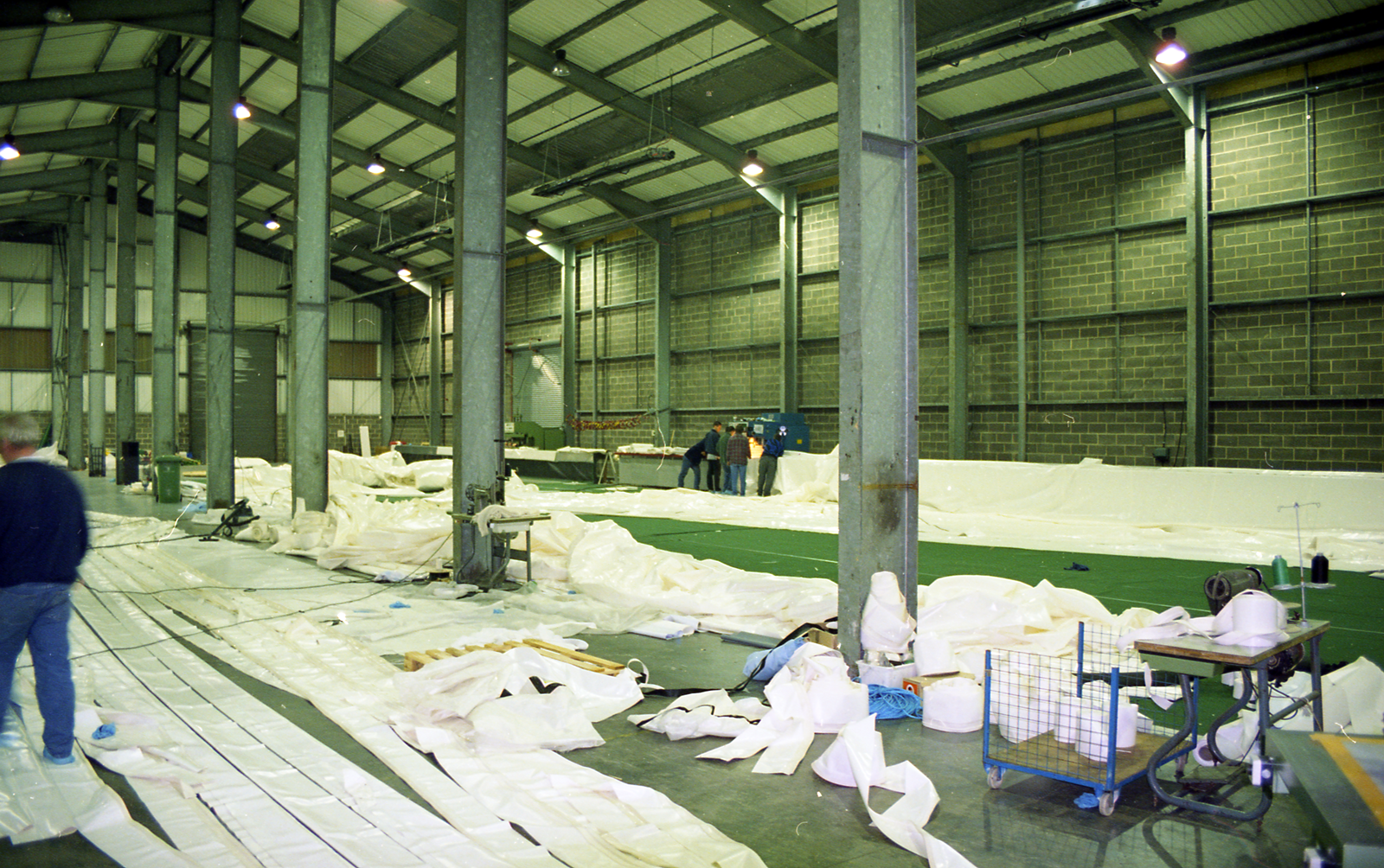
Manufacture - Membrane - Handsworth - Sheffield - 1998
The making of parts and components, (sometimes with the help of robots), is usually considered a subspecialty of mechanical engineering. The knowledge of 3D CAD-CAM, engineering design, fluid mechanics, structural computation, machine design, controls, robotics, operations, maintenance and logistics are all involved in the Valhalla project. All parts are designed with the aid of computer graphics. The computer carries out all the technical computations needed to make a part meet performance requirements. This aspect of computer-aided design (CAD) is frequently coupled with computer-aided manufacture (CAM) to produce parts automatically. The scope of the works in the contract comprised the design, supply, patterning, fabrication, delivery and erection of the fabric canopy together with the associated steelwork, cables and forks, anchors and supporting steelwork. The many different engineering functions to process the Valhalla project included research, design and development.
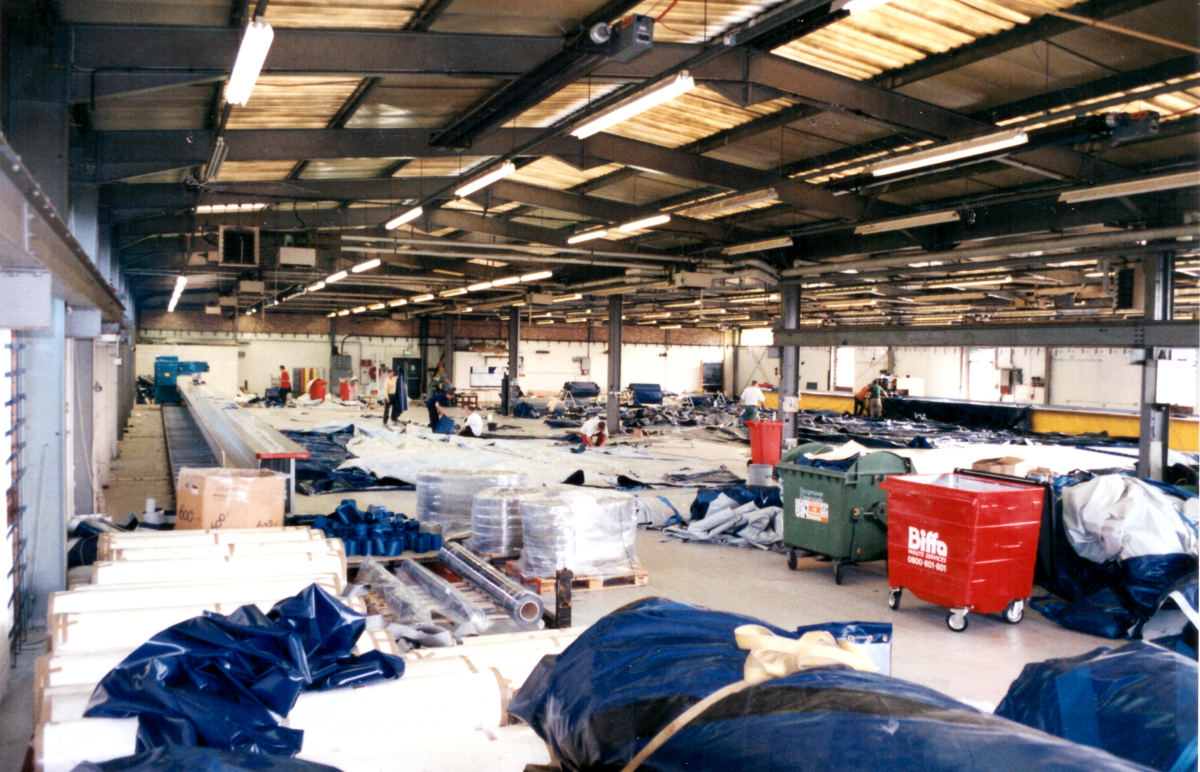

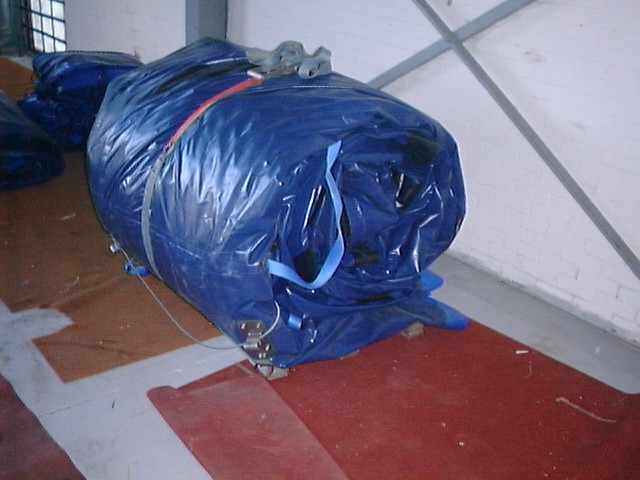
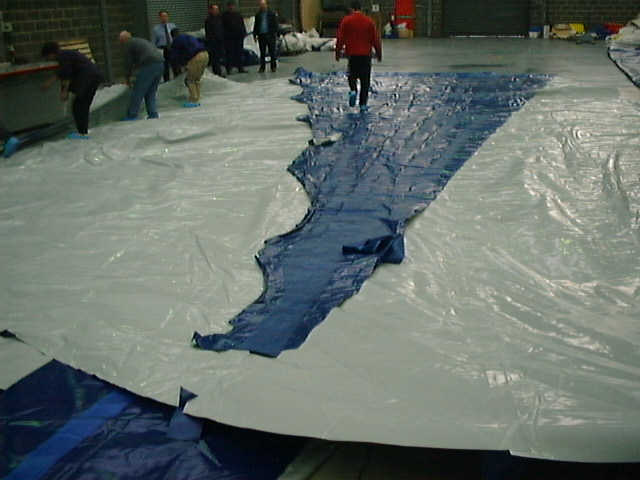
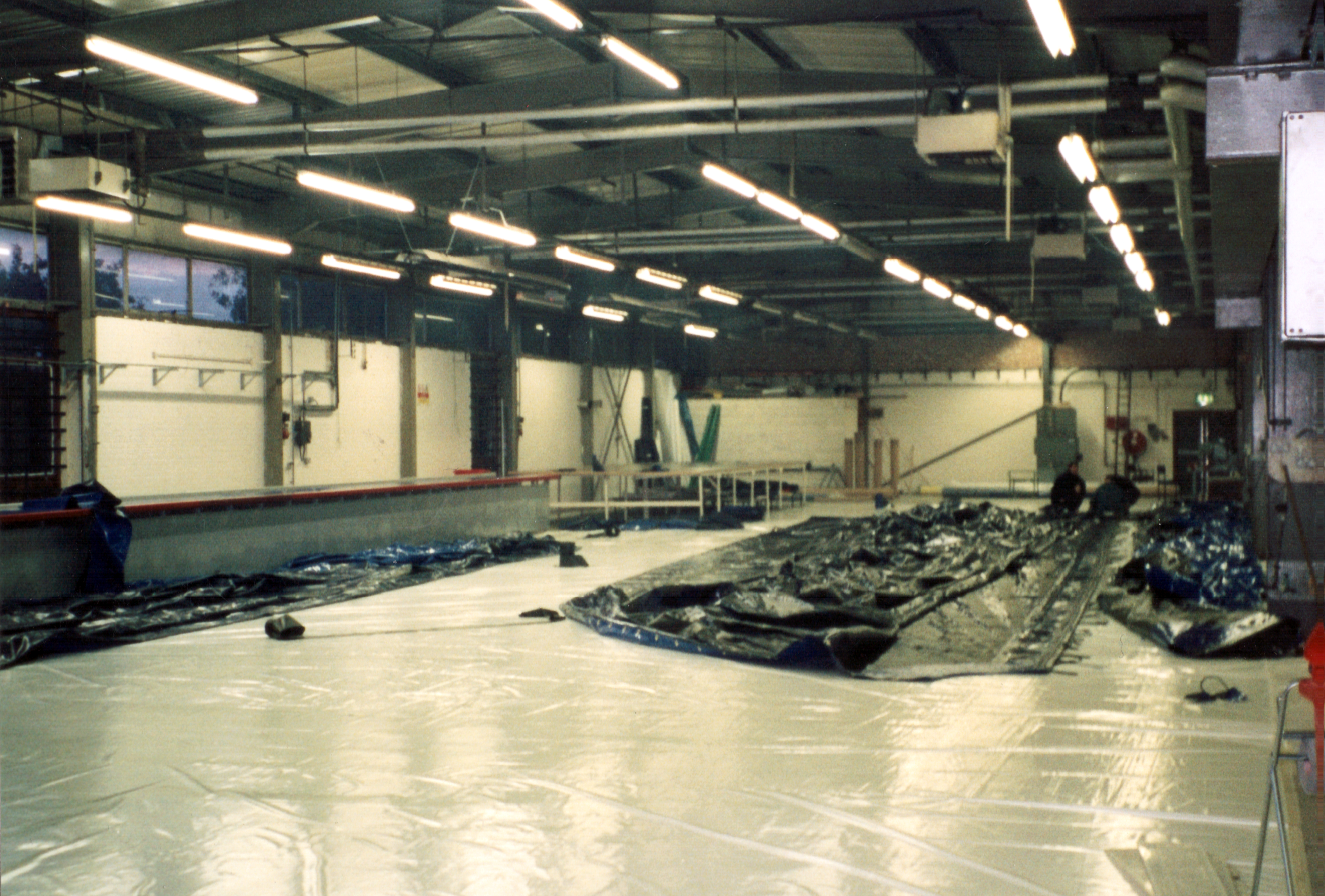
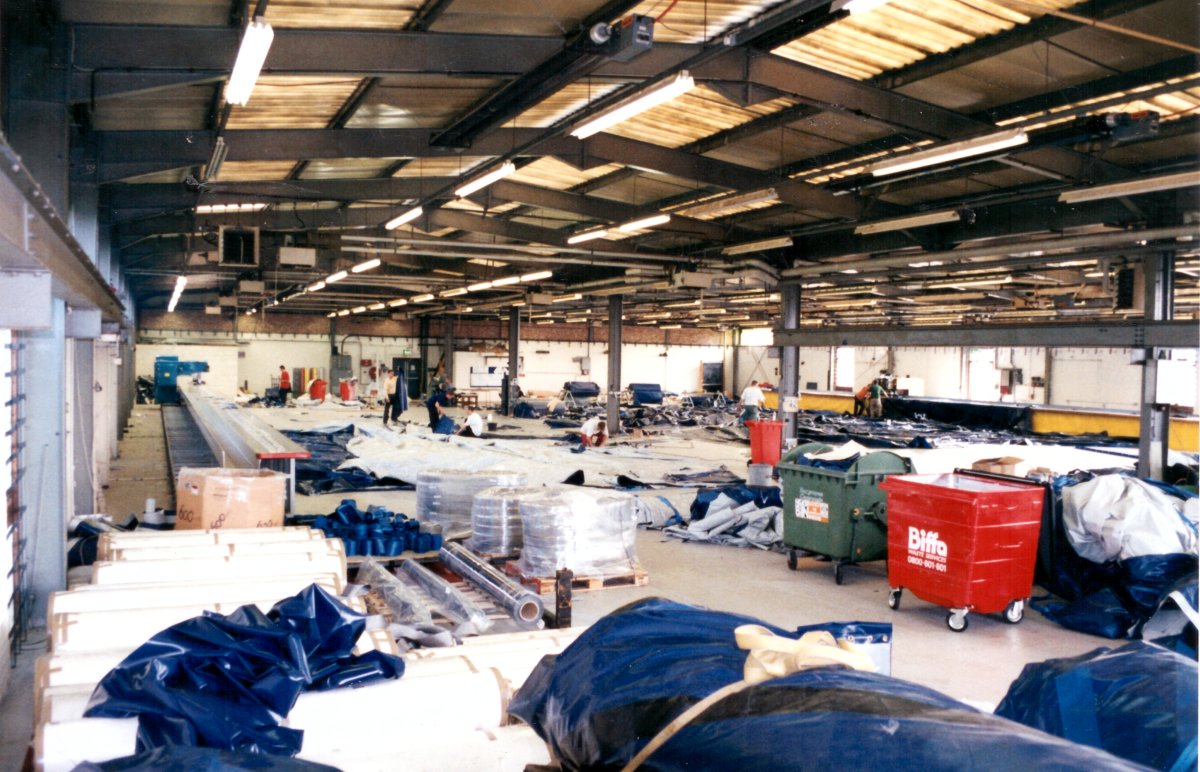
The FAST factory in Handsworth, Sheffield.
Membrane Manufacture
Special Structures Lab Ltd were responsible for producing full cutting patterns for the membrane work, together with the detailed steelwork drawings and the true angles of corner connection plates including, information such as: -
• Drawings showing detailed arrangement of all joints and boundary details.
• Sewing and welding procedures and sequence.
• Marking and numbering for the cloths.
• Full size drawings of corner details.
• Field layout drawing showing cutting dimensions of fabric including stretch compensation and decompensation.
• Indications of places where smoothing curves were required.
• Positions of pre punched holes for all site fitted clamps.
• A schedule of all shackles, ropes and fittings and a marking system for the same.
CAM (computer aided manufacturing), was used to plot the panels used to assemble the sections. This involved the plotting of individual panels and the cutting of all left and right hand versions of the panel. This part of the assembly process was totally automated. Fabric panels were marked out along and at right angles to the centre line of the roll to an accuracy of 2 mm, making sure that if the panel was laid out on the floor prior to marking there was no diagonal distortion of the weave. The fabric was then cut along the marked lines to an accuracy of +/- 2 mm. Cable cuffs were bias cut strips of fabric with the yarns at 45 degrees and were pre-fabricated with reinforcing where required.