TENSILE 1 AT THE 2002 EARTH SUMMIT, JOHANNESBURG
The Ubuntu Village and the Cultural Heart of Sustainable Development
1. EVENT CONTEXT AND SIGNIFICANCE
"UK structure houses Earth Summit exhibition"
-
14 March 2016 plasa.org
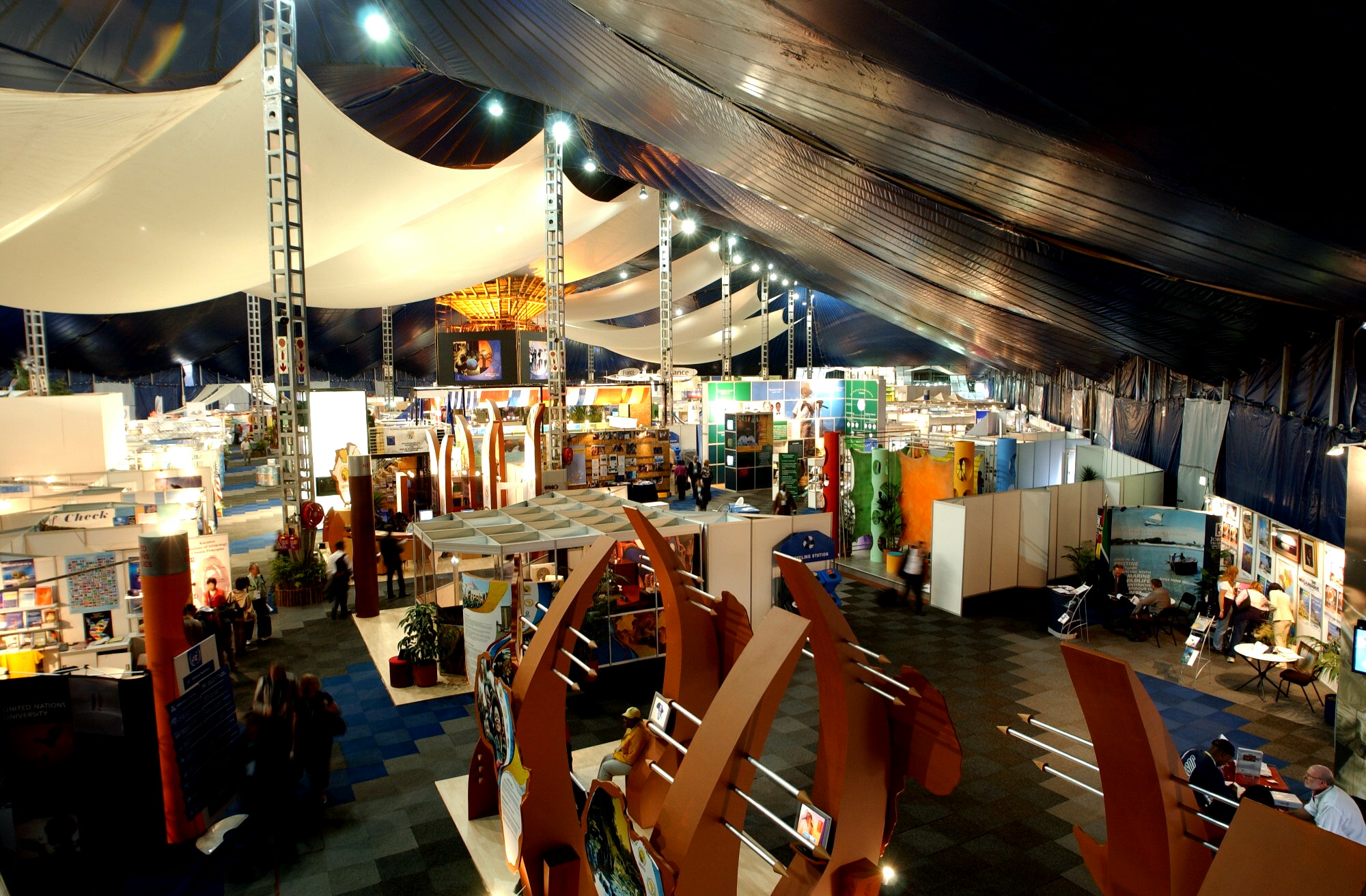
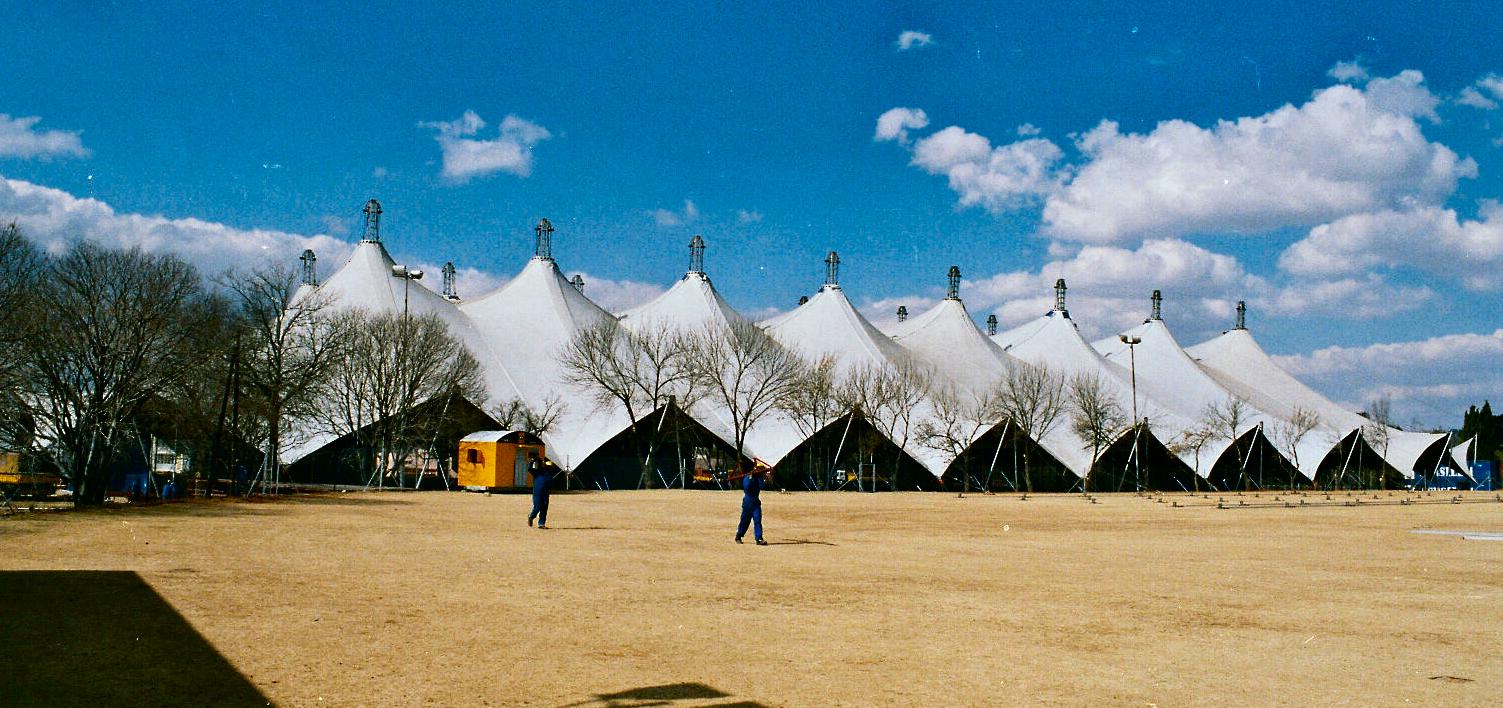
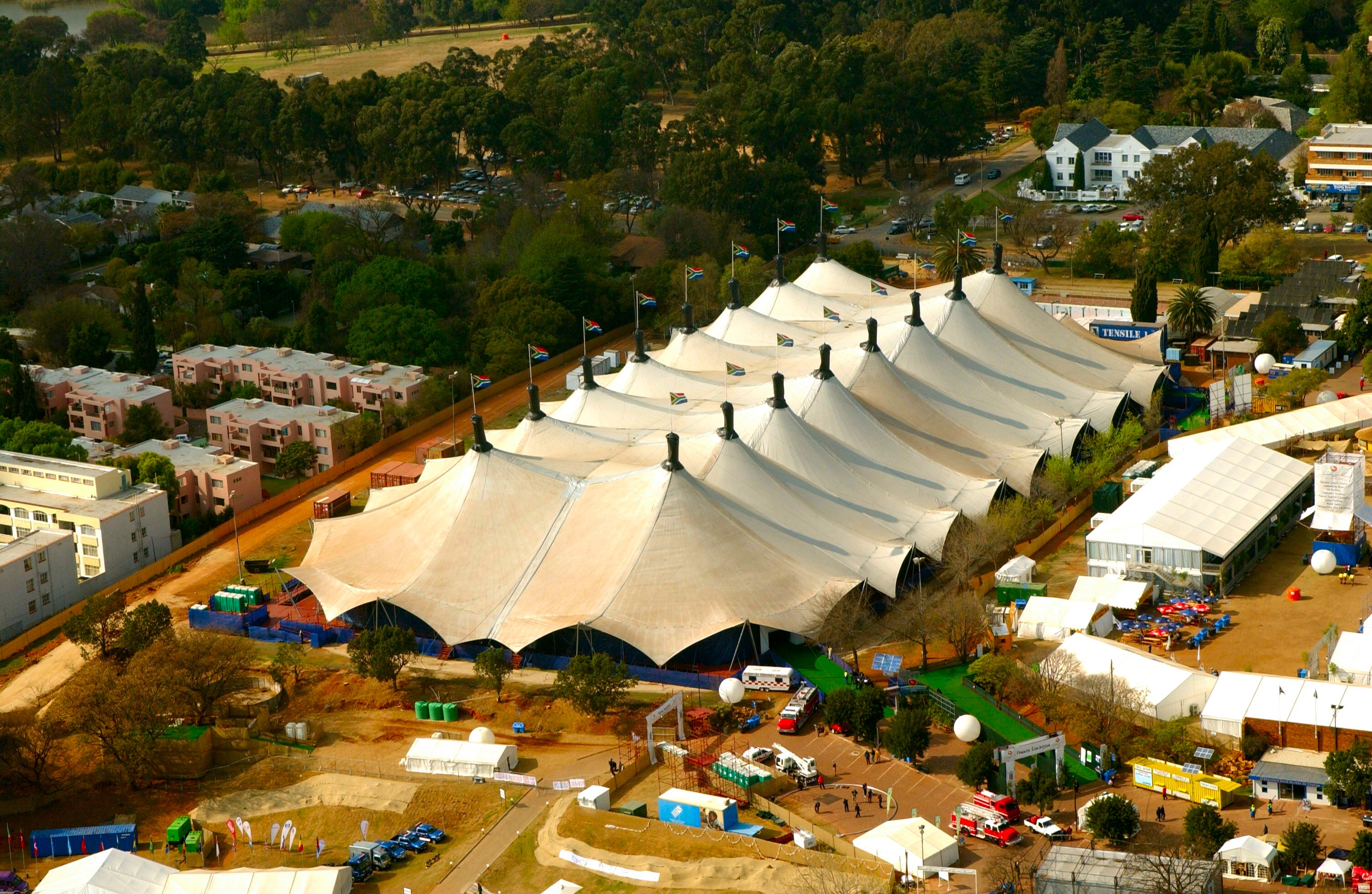
MoonBurst Structures Ltd, the Sheffield, UK-based company, has supplied equipment and services to the World Summit on Sustainable Development in Johannesburg, South Africa, through their technology partner, Gearhouse South Africa Pty. JOWSCO, the organizer of the World Environmental Summit in Johannesburg, used Tensile 1 to house the Ubuntu Village Exhibition. Tensile 1 is the UK designed and manufactured structure, which holds the Guinness world record for 'World’s Largest Portable Event Venue'. The exhibition runs alongside the summit, which is staged 10 years after the Rio Earth Summit. The structure has a surface area of 14,500sq.m and houses the whole of the exhibition, which includes many national pavilions. The exhibition runs for three weeks and has had an average attendance of 20,000 people per day. The structure is floored throughout, and the 18m internal height allows the use of two-storey exhibition stands inside.
Mark Ransom, technical director of the Ubuntu Village, said: "The use of Tensile 1 to house an exhibition of this importance shows that Gearhouse South Africa is now able to provide structures and equipment for world-class events. Rudi Enos has the sole design and manufacturing rights for the Tensile 1 and is currently involved with several projects around the world to install 10,000sq.m structures on a semi-permanent basis."
Rudi Enos, managing director of MoonBurst said: "It has been a pleasure to work with Gearhouse South Africa. Their professionalism has ensured that a difficult and complex job was undertaken without a hitch. I am pleased that Tensile 1 is now fulfilling its early promise by housing not only an event such as the world summit, but also many major events in Europe, Africa, and in the USA. The three Tensile 1 structures have now completed over 50 installations and survived 90 mile per hour winds on three separate occasions, meeting all the original design parameters. I am very proud of our team, who have worked hard on this project over the last five years."
(Lee Baldock)
https://ftp.plasa.org/news/uk-structure-houses-earth-summit-exhibition-ixpwnv(link is external)
1.1 The 2002 World Summit on Sustainable Development
The United Nations World Summit on Sustainable Development (WSSD) was held in Johannesburg, South Africa, from August 26 to September 4, 2002. Also known as 'Rio+10', the summit was a follow-up to the 1992 Earth Summit in Rio de Janeiro, aimed to address global challenges related to sustainable development, including environmental degradation and social inequality.

Summit Structure:
The summit operated through two distinct but interconnected venues:
Official Proceedings:
- Location: Sandton Convention Centre
- Participants: Government delegations, heads of state
- Focus: Policy negotiations, agreements, official declarations
- Character: Formal diplomatic proceedings
Public Engagement:
- Location: Ubuntu Village at the Wanderers venue
- Participants: Civil society, NGOs, business, cultural organizations
- Focus: Exhibitions, dialogue, cultural expression, public participation
- Character: Open, accessible, culturally rich
This dual-venue approach reflected the summit's commitment to inclusive dialogue—recognizing that sustainable development requires not only government action but also civil society engagement, business participation, and cultural transformation.
1.2 Scale and Attendance
According to Johannesburg Summit Secretary-General Nitin Desai, over 20,000 people were registered to attend the summit, far surpassing expectations. This unprecedented attendance made it the largest gathering in Africa's history.
Delegate Composition:
- More than 100 presidents and prime ministers
- 50 heads of major global corporations
- 15,000 representatives of non-governmental agencies
- Thousands of civil society participants
- Media representatives from around the world
- Support staff and operational personnel
The scale of participation reflected the global importance attached to sustainable development issues and the inclusive approach the organizers sought to achieve.
1.3 The Ubuntu Concept
The name "Ubuntu Village" drew from the African philosophical concept of Ubuntu—often translated as "I am because we are" or "humanity toward others." This philosophy emphasizes:
- Collective wellbeing over individual interest
- Interconnectedness of human beings
- Compassion and respect for others
- Community and mutual support
- Shared humanity transcending differences
The choice of Ubuntu as the organizing principle for the public engagement venue reflected the summit's themes:
- Global challenges require collective action
- Sustainable development depends on shared responsibility
- Solutions emerge through dialogue and cooperation
- Cultural diversity enriches rather than divides
-
Local wisdom and global cooperation complement each other
2. THE UBUNTU VILLAGE - LOCATION AND PURPOSE
2.1 Site and Timing
Location: The Wanderers venue in Johannesburg, South Africa
- Established sports venue providing substantial open space
- Accessible location within Johannesburg metropolitan area
- Adequate infrastructure for large-scale temporary installation
- Historical significance as gathering place
Operational Dates:
- Opening: August 17, 2002 (9 days before official summit start)
- Official Summit: August 26 - September 4, 2002
- Ubuntu Village extended operation: Until September 7, 2002
- Total operational period: 22 days
The early opening (August 17) allowed the Ubuntu Village to:
- Accommodate pre-summit activities and arrivals
- Enable exhibitor setup and preparation
- Host early civil society gatherings and workshops
- Build momentum approaching the official summit opening
- Establish itself as the cultural and public heart of the event
2.2 Role and Function
The Ubuntu Village served as the cultural hub for all those attending the Summit and associated events.
This positioning was intentional and strategic:
Complementary to Official Proceedings: While government delegates negotiated at the Sandton Convention Centre, the Ubuntu Village provided space for:
- Civil society expression and participation
- Cultural interpretation of sustainable development themes
- Business and innovation showcase
- Public dialogue and engagement
- Networking and relationship building across sectors
- Media access and reporting opportunities
Cultural Heart of the Summit: The Ubuntu Village embodied the cultural dimension of sustainable development:
- Exhibitions celebrating global diversity
- Arts and crafts representing cultural traditions
- Performance and artistic expression
- Indigenous knowledge and perspectives
- Youth voices and future visions
- Grassroots innovation and solutions
Accessible Public Face: Unlike the restricted official proceedings, the Ubuntu Village offered:
- Open access to broader publics
- Opportunity for ordinary people to engage with summit themes
- Visible manifestation of sustainable development principles
- Welcoming environment for diverse participants
- Less formal atmosphere encouraging dialogue
Operational Hub: Beyond symbolic and cultural functions, the Ubuntu Village provided essential services:
- Business facilities for participants
- Communications infrastructure
- Banking and practical services
- Meeting and conference spaces
- Information and coordination center
2.3 The Largest Gathering in Africa's History
The Ubuntu Village became the main public-facing component of what would become the largest gathering in Africa's history, with more than twenty thousand people from every corner of the world participating in various aspects of the summit.
This historic scale reflected:
- Global recognition of sustainable development urgency
- Africa's centrality to global development challenges and opportunities
- Success of inclusive approach to international conferences
- Drawing power of combining official and public programming
- Effectiveness of providing world-class facilities for engagement
The gathering's size posed enormous logistical challenges:
- Accommodating thousands of daily visitors
- Providing adequate facilities and services
- Managing security for high-profile attendees
- Ensuring accessibility and comfort
- Creating meaningful experience despite crowds
- Maintaining safety and emergency preparedness
3. TENSILE 1 AS THE CENTERPIECE
3.1 The World's Largest Portable Venue
The centrepiece of the Ubuntu Village was Tensile 1, the world's largest portable event venue. This wasn't merely a practical choice—it was a statement aligned with the summit's themes.
Scale Appropriate to Occasion:
- 12,600 square meters of covered space
- Equivalent to 3.1 acres under one roof
- Among the largest temporary structures ever deployed
- Guinness World Record recognition
- Matched the historic scale of the gathering itself
Symbolic Resonance: The selection of the world's largest portable venue for the world's largest gathering in Africa carried meaning:
- Temporary infrastructure for temporary gathering (not permanent monument)
- Reusable facility avoiding environmental impact of purpose-built construction
- Sophisticated capability demonstrating that quality need not be permanent
- Global technology serving African event
- Scale matching ambition of sustainable development agenda
3.2 Creating the Exhibition and Market Environment
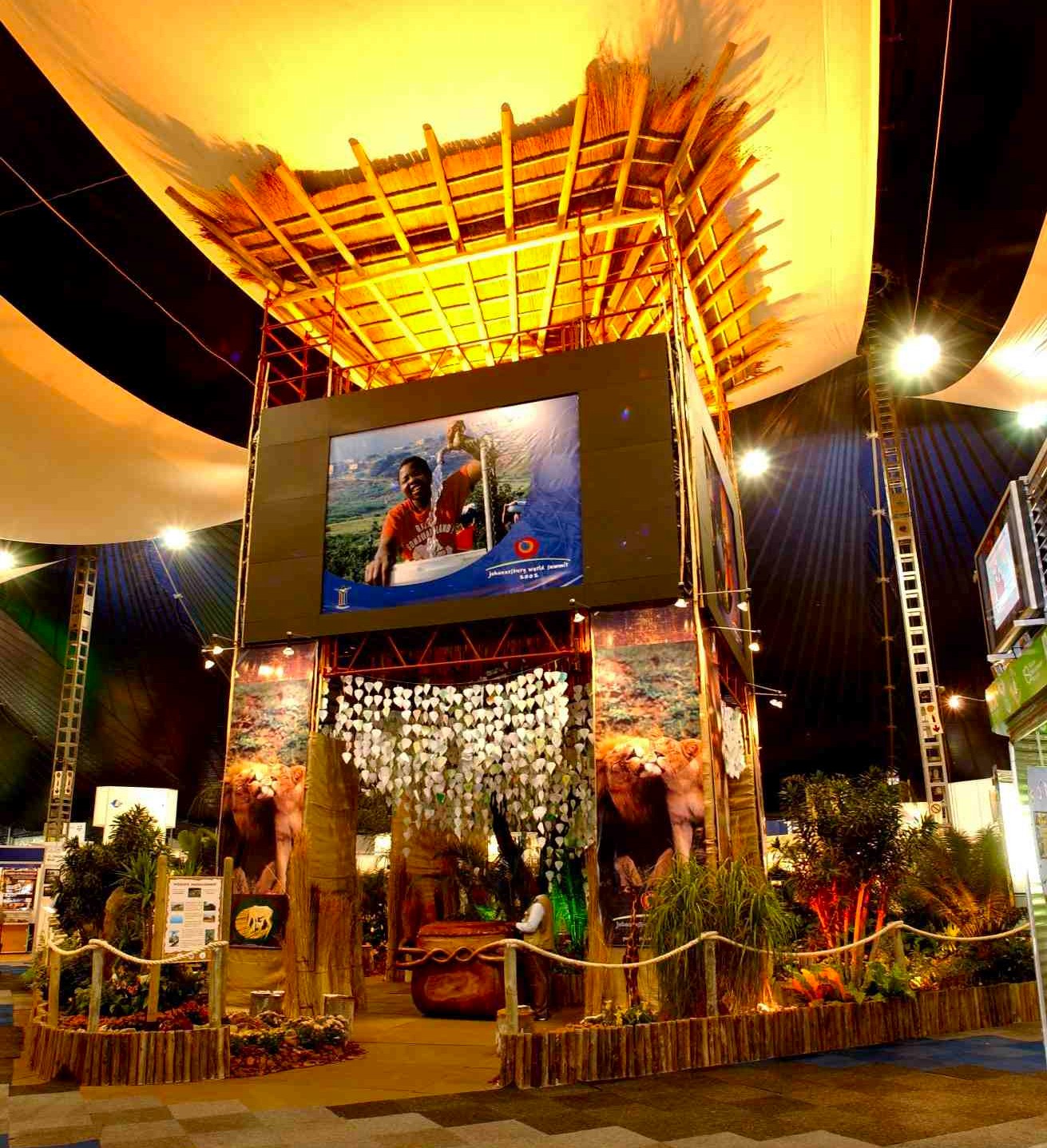
Tensile 1 housed the primary public programming of the Ubuntu Village:
Government and International Exhibitions:
- Exhibitions from the Department of Arts, Culture, Science and Technology
- Showcasing South African innovation and culture
- Demonstrating government commitment to sustainable development
- Platform for national and regional narratives
International Pavilions: Countries from around the world had exhibition stands within Tensile 1, including:
- European Space Agency (ESA): 72 square meter stand complete with displays and videos showcasing space technology contributions to earth observation and sustainable development
- Japan: Exhibits showcasing environmental initiatives and technological innovations
- Numerous other national delegations presenting their sustainable development programs
- Each pavilion representing national perspectives and priorities
- Collective mosaic of global approaches to shared challenges
The Arts and Crafts Imbizo:
- 200 stalls representing African artisans and craftspeople
- "Imbizo" meaning gathering or meeting in several African languages
- Showcasing traditional skills and cultural heritage
- Providing economic opportunity for local artisans
- Connecting cultural expression with sustainable livelihoods
- Creating vibrant, accessible market atmosphere
- Enabling visitors to acquire authentic African crafts
- Supporting local economy and communities
3.3 Business and Practical Services
Beyond exhibitions and cultural programming, Tensile 1 provided essential business infrastructure:
Conference Facilities:
- Business center with conference facilities
- Meeting spaces for side events and workshops
- Breakout areas for negotiations and discussions
- Professional environment for business engagement
- Technology support for presentations and communications
Banking and Financial Services:
- Eight bank machines (ATMs) providing cash access
- Essential for international visitors
- Supporting commercial transactions in the market
- Facilitating business operations
Communications Hub:
- Fax services (still important in 2002)
- Email access and internet connectivity
- Critical in pre-smartphone era for international delegates
- Overnight-mail drop points for urgent communications
- Office supplies for ad-hoc needs
- Cellphone rentals for international visitors
Comprehensive Service Package: The integration of these services within the primary venue was strategic:
- One-stop access to all necessary facilities
- Reduced need for delegates to leave venue
- Facilitated networking and serendipitous encounters
- Maximized time for engagement rather than logistics
- Demonstrated that temporary venue could provide permanent-facility services
4. OPERATIONAL SCALE AND ATMOSPHERE
4.1 Personnel and Staffing
The Ubuntu Village had about 9,000 people working at the site for the duration of the summit. This extraordinary workforce included:
Operational Staff:
- Venue management and coordination
- Security personnel
- Cleaning and maintenance crews
- Technical support (power, HVAC, IT)
- Emergency services and medical staff
- Transportation and logistics
Exhibitors and Vendors:
- 200 arts and crafts stall operators
- National pavilion staff from dozens of countries
- Exhibition designers and support crew
- Demonstration and interpretation personnel
- Sales and customer service staff
Service Providers:
- Banking and financial services staff
- Communications and IT support
- Food and beverage operations
- Conference and meeting support
- Business center operations
Event Programming:
- Cultural performers and artists
- Workshop and seminar facilitators
- Media and documentation teams
- Translation and interpretation services
- Protocol and diplomatic support
The 9,000-person workforce operating from the site for the summit's duration represented a temporary city—requiring coordination, communication, support services, and management infrastructure to function effectively.
4.2 Visitor Experience and Capacity
While exact daily visitor numbers within Tensile 1 specifically are not documented, the structure's design capacity and overall summit attendance suggest it routinely accommodated thousands of concurrent visitors.
Typical Day Scenario:
- Morning arrival of delegates and visitors
- National pavilions staffed and operational
- Arts and crafts market bustling with browsers and buyers
- Conference facilities hosting side events and meetings
- Business center supporting communications needs
- Continuous flow throughout 10-12 hour operational day
Peak Periods:
- Special events and keynote presentations
- Official visits by heads of state and dignitaries
- Cultural performances and ceremonies
- Opening and closing events
- Media availabilities and press conferences
Visitor Demographics:
- Government delegates from 193 countries
- NGO representatives (15,000 registered)
- Business leaders and corporate delegates
- Media representatives
- Civil society participants
- Local Johannesburg residents and visitors
- International tourists and observers
Atmosphere and Character: Contemporary accounts described:
- Energy and excitement of global gathering
- Rich cultural diversity visible everywhere
- Multiple languages and conversations
- Colorful displays and exhibitions
- Market vitality and commercial activity
- Purposeful engagement mixed with social interaction
- Sense of historic moment and shared mission
4.3 Extended Operation and Wind-Down
The village was open until September 7, 2002, extending several days beyond the official summit conclusion on September 4. This extended period served several purposes:
Practical Considerations:
- Allowed exhibitors time to pack and remove displays
- Enabled gradual departure of international delegates
- Reduced congestion and logistical bottlenecks
- Provided time for final meetings and farewells
Continued Engagement:
- Extended public access to exhibitions
- Additional time for civil society dialogue
- Completion of side events and workshops
- Media wrap-up and final reporting
Ceremonial Closure:
- Appropriate conclusion to major international gathering
- Recognition of staff and volunteer contributions
- Celebration of achievement and outcomes
- Symbolic ending of Ubuntu Village chapter
5. INTERNATIONAL PARTICIPATION AND EXHIBITIONS
5.1 Global Representation
The structure hosted pavilions and exhibits from numerous international delegations, creating a truly global showcase within the single venue.
Scale of Participation:
- Countries from around the world
- Every continent represented
- Developed and developing nations
- Large and small countries
- Diverse approaches and perspectives
Exhibition Themes: National pavilions typically showcased:
- Environmental initiatives and innovations
- Sustainable development programs
- Technological solutions
- Cultural approaches to sustainability
- Success stories and lessons learned
- International cooperation examples
- Future visions and commitments
5.2 Notable Exhibitors
European Space Agency (ESA):
- 72 square meter stand
- Complete with displays and videos
- Showcased satellite earth observation technology
- Demonstrated space technology contributions to sustainable development
- Monitoring climate change, deforestation, ocean health
- Data supporting sustainable resource management
- Technology transfer and capacity building
- International cooperation in space for earth's benefit
Japan:
- Exhibits showcasing environmental initiatives
- Japanese technological innovations for sustainability
- Energy efficiency and clean technology
- Waste reduction and recycling approaches
- Corporate environmental responsibility
- Traditional Japanese environmental wisdom
- Future-oriented solutions and visions
Other International Presence: While specific details of all pavilions aren't fully documented, the international character included:
- African nations showcasing regional approaches
- European Union and member state pavilions
- North and South American countries
- Asian nations presenting diverse perspectives
- Small island developing states highlighting vulnerability
- Regional economic communities
- International organizations (UN agencies, development banks)
5.3 Creating Dialogue Across Cultures
The concentration of international exhibitions within Tensile 1 created unique opportunities:
Cross-Cultural Learning:
- Visitors could traverse multiple national pavilions in single visit
- Compare and contrast approaches
- Identify common themes and unique innovations
- Understand cultural dimensions of sustainable development
- Recognize both diversity and shared challenges
Networking and Partnership:
- Exhibitors from different countries meeting and connecting
- Business leaders encountering government programs
- NGOs discovering potential partners
- Researchers sharing findings
- Youth delegates building international networks
Media Coverage:
- Journalists accessing multiple national perspectives efficiently
- Comprehensive coverage of global participation
- Human interest stories from diverse pavilions
- Visual richness for television and photography
- International reach amplifying summit messages
6. THE ARTS AND CRAFTS IMBIZO
6.1 The 200-Stall Market
The 200-stall arts and crafts imbizo represented a significant component of the Ubuntu Village programming—both in physical scale and cultural importance.
Market Scale:
- 200 individual vendor stalls
- Estimated 2,000-2,500 square meters of market space within Tensile 1
- Average stall size approximately 10-12.5 square meters
- Arranged for customer circulation and browsing
- Professional market organization and management
"Imbizo" Meaning: The use of "imbizo" (meaning gathering or meeting in several African languages) rather than simply "market" was significant:
- Elevated cultural and social dimension beyond commerce
- Recognized market as meeting place and social space
- Connected to African traditions of community gathering
- Implied dialogue and relationship, not just transaction
- Positioned artisans as cultural ambassadors
6.2 Artisan Participation and Products
Participating Artisans: While specific details of individual artisans aren't fully documented, the 200 stalls represented:
- South African craftspeople from diverse regions and communities
- Possibly broader African representation
- Multiple traditional craft forms
- Contemporary and traditional artists
- Established artisans and emerging talents
Craft Categories Likely Included:
- Textiles and weaving (traditional fabrics, tapestries)
- Beadwork and jewelry (traditional and contemporary designs)
- Wood carving and sculpture
- Ceramics and pottery
- Basket weaving
- Metalwork and wirecraft
- Painting and graphic arts
- Leather goods
- Musical instruments
- Home décor and functional objects
Quality and Authenticity:
- Authentic African crafts, not mass-produced imports
- Traditional techniques and patterns
- Cultural significance and stories behind works
- Meeting international visitor expectations for quality
- Representing South African and African cultural heritage
6.3 Economic and Cultural Significance
Economic Opportunity: The 200-stall market provided:
- Income opportunity for 200+ artisans during 3-week period
- Access to international customers with purchasing power
- Exposure to potential ongoing business relationships
- Commission-free or low-commission sales (supporting artisans)
- Employment for support staff (setup, security, coordination)
Cultural Exchange:
- International visitors encountering African cultural traditions
- Artisans explaining techniques, meanings, traditions
- Stories behind designs and patterns
- Connection between sustainable livelihoods and cultural preservation
- Living demonstration that culture is both heritage and economy
Sustainable Development Connection: The imbizo embodied multiple sustainable development themes:
- Cultural diversity as strength and resource
- Traditional knowledge and sustainable practices
- Livelihood strategies supporting communities
- Small-scale enterprise and entrepreneurship
- Gender equity (many African craft traditions led by women)
- Fair trade and economic justice
- Preservation of traditional skills through economic viability
Visitor Experience:
- Vibrant, colorful, energetic atmosphere
- Opportunity to acquire unique, authentic items
- Direct interaction with artisans
- Cultural education through commerce
- Contrasting peaceful market atmosphere with formal summit proceedings
- Memorable, personal connection to Africa
7. SECURITY, SAFETY, AND MEDICAL SERVICES
7.1 Security Context and Requirements
The Earth Summit occurred less than one year after September 11, 2001, in a security environment heightened by global terrorism concerns and the presence of over 100 heads of state.
Security Challenges:
- More than 100 presidents and prime ministers attending
- 50 heads of major global corporations
- 15,000 NGO representatives
- Thousands of daily visitors to Ubuntu Village
- Open, accessible public space contrasting with secured official venue
- Balance between security and summit's inclusive spirit
Security Measures Implemented: The venue included strict security and emergency services on standby, suggesting:
- Perimeter security and access control
- Screening procedures at entrances
- Security personnel throughout venue
- CCTV monitoring and surveillance
- Coordination with South African security services
- Intelligence sharing and threat assessment
- VIP protection protocols for high-level visits
- Crowd management procedures
- Emergency evacuation planning
Security Infrastructure:
- Designated entry and exit points
- Secure zones for banking and valuable exhibitions
- Staff identification and credentialing systems
- Communication systems for security coordination
- Response protocols for various threat scenarios
7.2 Medical and Emergency Services
A medical centre within the venue provided health services for the large daily crowds:
Medical Facility Capabilities:
- First aid for routine incidents (minor injuries, illness)
- Emergency medical response capability
- Trained medical personnel on duty continuously
- Basic diagnostic equipment
- Medication for common ailments
- Stabilization for serious medical events pending transport
Medical Considerations for International Gathering:
- Heat-related illness potential (late winter in Johannesburg, but still warm days)
- Crowd-related incidents (fainting, exhaustion)
- Pre-existing conditions among elderly delegates
- Food safety and hygiene
- Communicable disease surveillance
- Mental health and stress support
Emergency Services Coordination: Emergency services on standby implied:
- Ambulance services with rapid access
- Hospital coordination for serious cases
- Fire response capability
- Evacuation procedures and training
- Emergency communication systems
- Regular drills and preparedness exercises
7.3 Daily Operations and Incident Management
Routine Safety:
- Daily safety inspections before opening
- Crowd monitoring and flow management
- Lost and found services
- First aid stations clearly marked and accessible
- Emergency egress routes maintained clear
- Staff trained in emergency procedures
Incident Response: With 9,000 staff and thousands of daily visitors over 22 days, the operation successfully:
- Managed minor incidents without major disruptions
- Maintained safety throughout the event period
- Protected high-value exhibitions and commercial inventory
- Ensured visitor confidence and comfort
- Enabled summit to proceed without security-related interruptions
8. TIMELINE AND OPERATIONAL PHASES
8.1 Pre-Summit Phase (August 17-25, 2002)
Week Before Official Summit Opening:
The Ubuntu Village opened nine days before the official summit start, serving multiple purposes:
Exhibitor Setup and Preparation:
- International pavilions installed and tested
- 200 craft stalls set up and merchandise displayed
- Business center commissioned and tested
- Communications systems verified
- Banking services operational
- Conference facilities prepared
Pre-Summit Activities:
- Civil society pre-summit gatherings
- NGO coordination meetings
- Youth pre-summit programs
- Media previews and briefings
- Technical workshops and preparatory sessions
- Early delegate arrivals and orientation
Testing and Refinement:
- All systems operational testing
- Staff training and familiarization
- Crowd flow and logistics refinement
- Problem identification and correction
- Building confidence approaching summit opening
Building Momentum:
- Media coverage of preparations
- Excitement and anticipation building
- Johannesburg ready to welcome the world
- Ubuntu Village establishing identity as cultural heart
8.2 Official Summit Phase (August 26 - September 4, 2002)
Nine Days of Peak Operations:
Daily Rhythm:
- Morning opening (typically 8:00 or 9:00 AM)
- Morning sessions and activities
- Lunchtime peak (dining, networking)
- Afternoon programming
- Evening events and cultural programs
- Evening closing (typically 7:00-9:00 PM)
Throughout Summit Period:
- Government delegations working at Sandton Convention Centre by day
- Many delegates visiting Ubuntu Village for cultural programming, exhibitions, shopping
- Civil society organizations conducting workshops, panels, demonstrations
- Business networking and deal-making
- Media coverage and interviews
- Cultural performances and celebrations
High-Profile Visits:
- Heads of state and government visiting Ubuntu Village
- Photo opportunities at national pavilions
- Media events and press availabilities
- Public engagement by world leaders
- Recognition of civil society contribution
Sustained Operations:
- 9,000 staff maintaining operations daily
- 200 artisans staffing market stalls
- National pavilions open and staffed
- Business services continuously available
- Security and medical services 24/7
- Maintenance and cleaning overnight
Key Summit Milestones:
- Opening ceremonies and welcome events
- Mid-summit assessments and adjustments
- High-level segment (heads of state speeches)
- Adoption of Johannesburg Declaration and Plan of Implementation
- Closing ceremonies and commitments
8.3 Wind-Down Phase (September 5-7, 2002)
Three Days of Gradual Closure:
Continued Public Access:
- Ubuntu Village remained open for additional three days
- Exhibitions still viewable
- Arts and crafts market continued operating
- Business services maintained
- Opportunity for those unable to visit during peak period
Exhibitor Departure:
- National pavilions beginning pack-down
- Careful removal of displays and materials
- Shipping arrangements for international returns
- Inventory and accounting completion
- Final sales for artisan vendors
Staff and Volunteer Recognition:
- Thank you events and celebrations
- Recognition of extraordinary effort
- Documentation of lessons learned
- Farewell gatherings
- Closure ceremonies for staff and volunteers
Media Wrap-Up:
- Final interviews and reporting
- Summit outcome analysis
- Success story documentation
- Photographic and video records completion
September 7 Final Closure:
- Last visitors departing
- Final services shutdown
- Security transition to demobilization
- Symbolic moment marking end of historic gathering
- Transition to dismantling and site restoration phase
8.4 Post-Event Phase (September 8 - October 16, 2002)
Five to Six Weeks of Demobilization:
Week 1 (September 8-14): Exhibition Strike
- Complete removal of all exhibition materials
- National pavilions dismantled and packed
- Arts and crafts vendors completed departure
- Equipment and furnishings removed
- Initial cleaning and site preparation
Weeks 2-4 (September 15 - October 5): Structure Removal
- Systematic dismantling of temporary infrastructure
- All suspended equipment and overhead systems removed
- Staging and flooring dismantled and removed
- Structure components carefully packed for transport
Weeks 5-6 (October 6-16): Site Restoration
- Complete restoration of Wanderers venue
- Turf repair and landscape restoration
- Site returned to original condition
- Final inspections and approvals
- Handback to venue management
Documentation and Assessment:
- Final reports and documentation
- Lessons learned capture
- Success metrics and outcomes
- Financial accounting and closure
- Archive material organized and stored
9. OUTCOMES AND LEGACY
9.1 Immediate Summit Outcomes
Johannesburg Declaration: The political declaration reaffirming commitment to sustainable development, adopted by assembled leaders.
Johannesburg Plan of Implementation: Specific commitments and actions on:
- Poverty eradication
- Consumption and production patterns
- Natural resource base protection
- Sustainable development in a globalizing world
- Health, education, and livelihoods
- Means of implementation (finance, technology, capacity building)
Civil Society Contribution: The Ubuntu Village and its programming enabled:
- Civil society voices influencing outcomes
- Business commitments and partnerships announced
- Public awareness and engagement
- Media coverage reaching global audiences
- Networking and relationship building for ongoing collaboration
9.2 Ubuntu Village Specific Achievements
Scale and Participation:
- Successfully accommodated thousands of daily visitors over 22 days
- Provided platform for global showcase (dozens of national exhibitions)
- Supported 200 artisan livelihoods through market
- Delivered comprehensive business and communications services
- Maintained safety and security throughout
- Created welcoming, accessible environment for diverse participants
Cultural Impact:
- Showcased African culture and creativity to world
- Demonstrated Ubuntu philosophy in practice
- Provided memorable experience for international visitors
- Created positive image of South Africa and Africa
- Celebrated diversity while emphasizing shared humanity
Operational Excellence:
- Largest temporary event infrastructure in Africa to that point
- Complex logistics managed successfully
- Multiple functions integrated effectively
- Professional standards maintained throughout
- No major incidents or disruptions
9.3 Demonstration of Sustainable Infrastructure
Symbolic Achievement: Hosting the world's largest gathering on sustainable development in the world's largest portable venue carried powerful symbolism:
Reusable Infrastructure:
- Tensile 1 embodied principle of resource efficiency through reuse
- Avoided environmental impact of purpose-built permanent facility
- Demonstrated high-quality temporary need not compromise on capability
- Structure continued serving hundreds of events after Johannesburg
Complete Site Restoration:
- Wanderers venue returned to original condition
- No permanent environmental impact
- Turf and landscape restored
- Sustainable approach to major event infrastructure
Adaptability:
- Same structure capable of serving diverse functions
- Multi-purpose design avoiding specialized single-use construction
- Flexible configuration meeting varied requirements
Quality and Capability:
- Sophisticated capability matching permanent facilities
- Professional exhibition standards
- Comprehensive services and infrastructure
- Demonstrated that sustainable choices need not sacrifice quality
9.4 Long-Term Influences
Event Infrastructure Thinking: The successful deployment influenced subsequent major events to consider:
- Sophisticated temporary structures as alternative to permanent construction
- Environmental benefits of reusable infrastructure
- Complete site restoration as achievable standard
- Quality temporary solutions for short-duration needs
Africa's Capacity:
- Demonstrated Africa's capability to host major international gatherings
- Established precedent for subsequent African summits and conferences
- Built confidence in African venues and infrastructure
- Showcased South African organizational capability
Inclusive Summit Model:
- Validated dual-venue approach (official + public)
- Demonstrated value of civil society engagement space
- Established expectation that major summits should include public participation
- Created model replicated in subsequent international conferences
Cultural Dimension:
- Reinforced importance of cultural programming in international conferences
- Demonstrated how cultural engagement enriches policy dialogue
- Validated market/commercial integration in summit programming
- Showed power of Ubuntu philosophy in international context
10. HUMAN STORIES AND EXPERIENCES
10.1 International Delegates
For the thousands of international delegates, the Ubuntu Village provided:
First Impressions of Africa:
- Many delegates' first visit to African continent
- Ubuntu Village as welcoming introduction
- Cultural richness dispelling stereotypes
- Vibrant market atmosphere showing African vitality
- Professional organization demonstrating capability
Networking and Connection:
- Serendipitous encounters in market and exhibition spaces
- Informal conversations leading to partnerships
- Business cards exchanged over coffee or craft browsing
- Relationships formed that continued beyond summit
- Less formal atmosphere than official proceedings enabling authentic connection
Cultural Education:
- Learning about African traditions through crafts and artisans
- Understanding sustainable development from African perspectives
- Experiencing Ubuntu philosophy firsthand
- Appreciating cultural diversity within Africa
- Encountering indigenous knowledge and practices
Memorable Moments:
- Acquiring meaningful crafts to take home
- Tasting African foods and experiencing hospitality
- Meeting artisans and hearing their stories
- Seeing one's nation's pavilion in international context
- Participating in cultural performances and celebrations
10.2 South African Hosts
For South Africans involved in organizing and operating the Ubuntu Village:
National Pride:
- Showcasing South Africa to the world
- Demonstrating organizational capability
- Presenting African culture with dignity and authenticity
- Contributing to historic international gathering
- Building positive international perceptions
Economic Opportunity:
- 9,000 people employed during summit
- 200 artisans accessing international market
- Local suppliers and services benefiting
- Skills and experience gained
- Economic injection into Johannesburg economy
Learning and Growth:
- Exposure to international best practices
- Understanding global perspectives on sustainable development
- Building capacity in event management
- Developing professional standards
- Creating transferable skills and knowledge
Legacy and Memory:
- Personal participation in historic event
- Stories shared for years afterward
- Contribution to something larger than self
- Sense of being part of Africa's story
- Pride in successful delivery
10.3 Artisan Vendors
For the 200 artisans operating stalls in the imbizo:
Unprecedented Opportunity:
- Access to international customers over three-week period
- Sales volume potentially exceeding months of normal business
- International exposure for work and skills
- Validation of cultural traditions through commercial success
- Stories of meaningful interactions with customers
Cultural Ambassador Role:
- Explaining traditions and techniques to interested visitors
- Representing African culture and creativity
- Building understanding through personal connection
- Sharing stories and meanings behind designs
- Educating about sustainable traditional practices
Professional Development:
- Learning from customer preferences and feedback
- Adapting offerings to international market
- Building confidence in quality and value of work
- Networking with other artisans
- Potential ongoing business relationships established
Economic Impact:
- Significant income during summit period
- Resources for materials, equipment, family needs
- Possibility of continuing business from summit contacts
- Investment in craft development and production
- Economic validation of traditional skills
10.4 Young People and Future Generations
Youth participation in the summit and Ubuntu Village:
Youth Voice:
- Youth pre-summit and parallel activities
- Young people's perspectives in exhibitions
- Future-oriented programming and workshops
- Youth from around the world connecting
- Next generation's stake in sustainable development
Inspiration and Motivation:
- Exposure to global issues and solutions
- Meeting young leaders from other countries
- Understanding role they can play
- Inspiration from diversity of approaches
- Motivation to continue engagement
Educational Experience:
- Living learning about sustainable development
- Cultural education through immersion
- Understanding international cooperation
- Experiencing Ubuntu philosophy
- Memories shaping future commitment
Long-Term Influence:
- Young people from 2002 now in leadership positions
- Experiences shaping career choices and values
- Networks maintained over decades
- Commitment to sustainable development sustained
- Inspiration passed to next generation
11. MEDIA COVERAGE AND GLOBAL REACH
11.1 Media Presence and Operations
Thousands of media representatives covered the summit:
Media Facilities:
- Press center and working spaces
- Interview areas and press conference facilities
- Technology support for filing stories
- Credential management and access control
Ubuntu Village Coverage:
- Visual richness ideal for television and photography
- Colorful market and exhibitions
- Cultural performances and events
- Human interest stories from around the world
- Contrast with formal proceedings at Sandton
Story Angles:
- Scale and historic significance of gathering
- Civil society participation and voice
- African culture and creativity on display
- Sustainable development initiatives showcased
- International cooperation and partnerships
- Success stories and innovative solutions
11.2 Global Reach
Media coverage amplified Ubuntu Village impact globally:
Television Coverage:
- International news broadcasts featuring market and exhibitions
- Documentary programs on summit outcomes
- Visual content reaching hundreds of millions worldwide
- Ubuntu Village as backdrop for stand-ups and interviews
Print and Online Media:
- Feature stories on artisans and exhibitors
- Photo essays showcasing cultural diversity
- Analysis pieces on civil society role
- Coverage of national pavilion displays
- Ubuntu philosophy explanations and context
Social Impact:
- Global audiences learning about sustainable development
- Positive images of Africa and African culture
- Understanding of civil society contribution to global issues
- Awareness of sustainable development challenges and opportunities
11.3 Lasting Media Archive
The summit created extensive documentation:
- Thousands of photographs
- Hours of video footage
- Written accounts and reports
- Official documentation and proceedings
- Personal accounts and memoirs
This archive continues to serve:
- Educational purposes
- Historical research
- Inspiration for subsequent events
- Documentation of sustainable development movement
- Memory and legacy preservation
12. SIGNIFICANCE AND CONCLUSION
12.1 The Ubuntu Village Achievement
The Ubuntu Village, with Tensile 1 as its centrepiece, successfully served as the cultural hub for the largest gathering in Africa's history. Over 22 days of operations (August 17 - September 7, 2002), it:
Accommodated Historic Scale:
- Thousands of daily visitors
- Over 20,000 registered summit participants
- 100+ heads of state and government
- 15,000 NGO representatives
- 9,000 operational staff
- 200 artisan vendors
Provided Comprehensive Programming:
- Dozens of international national pavilions
- 200-stall arts and crafts market
- Business and conference facilities
- Communications and banking services
- Cultural performances and events
- Workshop and meeting spaces
Created Welcoming Environment:
- Safe, secure, professional operations
- Accessible to diverse participants
- Culturally rich and engaging atmosphere
- Efficient services and logistics
- Memorable visitor experiences
Maintained Excellence:
- No major incidents or disruptions
- Professional standards throughout
- Successful balance of security and accessibility
- Effective coordination of complex operations
- Positive outcomes and feedback
12.2 Ubuntu Philosophy Embodied
The Ubuntu Village successfully manifested the philosophy for which it was named:
"I Am Because We Are":
- Collective achievement through thousands working together
- Diverse participants united in shared purpose
- Individual contributions creating whole greater than sum of parts
- Mutual support and cooperation essential to success
Humanity Toward Others:
- Welcoming environment for all participants
- Respect for cultural diversity
- Recognition of dignity and worth of each person
- Compassion and care in operations and interactions
Community and Connection:
- Networking and relationship building
- Cross-cultural learning and understanding
- Partnerships formed across sectors and nations
- Lasting bonds created through shared experience
Sustainable Development Values:
- Linking culture, economy, environment
- Recognizing traditional knowledge and practices
- Celebrating diversity as strength
- Understanding interconnectedness of challenges and solutions
- Commitment to collective wellbeing over narrow interest
12.3 Contribution to Summit Outcomes
While government delegates negotiated at Sandton Convention Centre, the Ubuntu Village made essential contributions:
Civil Society Voice:
- Platform for NGO participation and expression
- Business engagement and partnerships announced
- Grassroots perspectives informing discussions
- Democratic participation in global dialogue
Cultural Dimension:
- Sustainable development as cultural issue recognized
- Traditional knowledge and indigenous perspectives included
- Arts and culture as sustainability strategy validated
- African culture celebrated and respected
Public Engagement:
- Broader publics connected to summit themes
- Media access enabling global reach
- Educational impact on visitors and audiences
- Inspiration for continued engagement
Practical Demonstration:
- Reusable infrastructure showing sustainability in practice
- International cooperation visible in exhibitions
- Diverse approaches and solutions showcased
- Success stories providing hope and direction
12.4 Lasting Legacy
The Ubuntu Village and the 2002 Earth Summit left multiple legacies:
For Sustainable Development Movement:
- Validation of inclusive, participatory approach
- Recognition of civil society's essential role
- Cultural dimension established as integral
- African perspectives centered in global dialogue
For South Africa and Africa:
- Demonstrated capacity to host major international events
- Showcased African culture and creativity globally
- Built confidence and capability
- Created positive international perception
For Event Infrastructure:
- Validated sophisticated temporary structures for major events
- Demonstrated reusable infrastructure benefits
- Established standards for large-scale temporary facilities
- Influenced subsequent event planning worldwide
For Participants:
- Life-changing experiences for thousands
- Relationships and networks continuing decades later
- Inspiration sustaining commitment to sustainable development
- Memories enriching understanding of global issues
For Future Generations:
- Model of international cooperation
- Example of cultural celebration within global dialogue
- Demonstration that ambitious gatherings achievable
- Inspiration for continued work on sustainable development
12.5 Final Reflection
The Ubuntu Village at the 2002 Earth Summit in Johannesburg stands as a remarkable achievement in international event organization and a powerful demonstration of how physical infrastructure can support and amplify global dialogue on critical issues.
Tensile 1, the world's largest portable venue, provided the physical space. But the Ubuntu Village created something more—a cultural heart, a meeting place, a market, a showcase, a symbol. It brought together artisans and ambassadors, traditional crafts and space technology, market vitality and diplomatic protocol, African hospitality and global participation.
For 22 days, the Wanderers venue in Johannesburg became the center of global attention and engagement on sustainable development. The Ubuntu Village welcomed the world, celebrated African culture, facilitated dialogue and connection, and contributed meaningfully to humanity's ongoing effort to build a sustainable future.
The structure stood for weeks and then departed, leaving the site as it was found. But the memories, relationships, commitments, and inspiration it housed continue to influence the thousands who passed through its doors and the millions who learned about it through media coverage.
In this sense, the Ubuntu Village achieved its deepest purpose—creating a temporary physical space that generated lasting impact, embodying the Ubuntu philosophy that we are all interconnected, that what we create together is greater than what any can achieve alone, and that sustainable development requires all of humanity working in partnership, respecting diversity while recognizing shared destiny.
Ref:
Event Deployment and Cultural Significance Compiled from: UN WSSD official records, contemporary media accounts, event documentation, participant testimonies, summit proceedings, and historical analyses of the 2002 Johannesburg Earth Summit